Philippines on a Budget 2026: 10-Day Costs, Routes & Itinerary
How much a Philippines trip costs in 2026, with three cheap 10-day routes, daily budgets, where to stay, what to skip, and a full sample itinerary.
On the second night of my first Philippines trip I paid PHP 480 for a small bowl of sinigang at a beachfront restaurant in El Nido. Two streets back, the carinderia I walked past on the way home was charging PHP 110 for the same dish, made better. That PHP 370 difference, repeated three times a day for ten days, is roughly what separates a cheap Philippines trip from one that quietly drains your card.
You can travel here on very little and still have a good time. The people who blow their budget mostly do it for the same three reasons: too many island jumps, last-minute flights, and tourist pricing every meal. The fix isn't living on instant noodles — it's picking a route that doesn't punish you, eating where Filipinos eat, and locking in the things that swing in price (flights, peak-season rooms) before everything else.
This guide compares three 10-day routes — a Visayas loop, a flightless Luzon trip, and a stripped-back Palawan option — with the actual numbers. There's also a separate backpacker mode for travellers trying to stay under PHP 1,500 a day. One ground rule: all the totals exclude flights. Airfare changes too much by season and origin to bake in fairly. Compare the routes first, then add your own quote on top.
The Three Routes Compared
Three ways to do 10 days. If you've never been before and you're not sure which to pick, do Route A — it's the one I'd suggest a friend over a drink. Route B is the fallback when island airfares spike. Route C only makes sense if Palawan's lagoons are the specific reason you're flying out. All costs are per person and exclude flights.
Route A: Cebu + Bohol + Siquijor
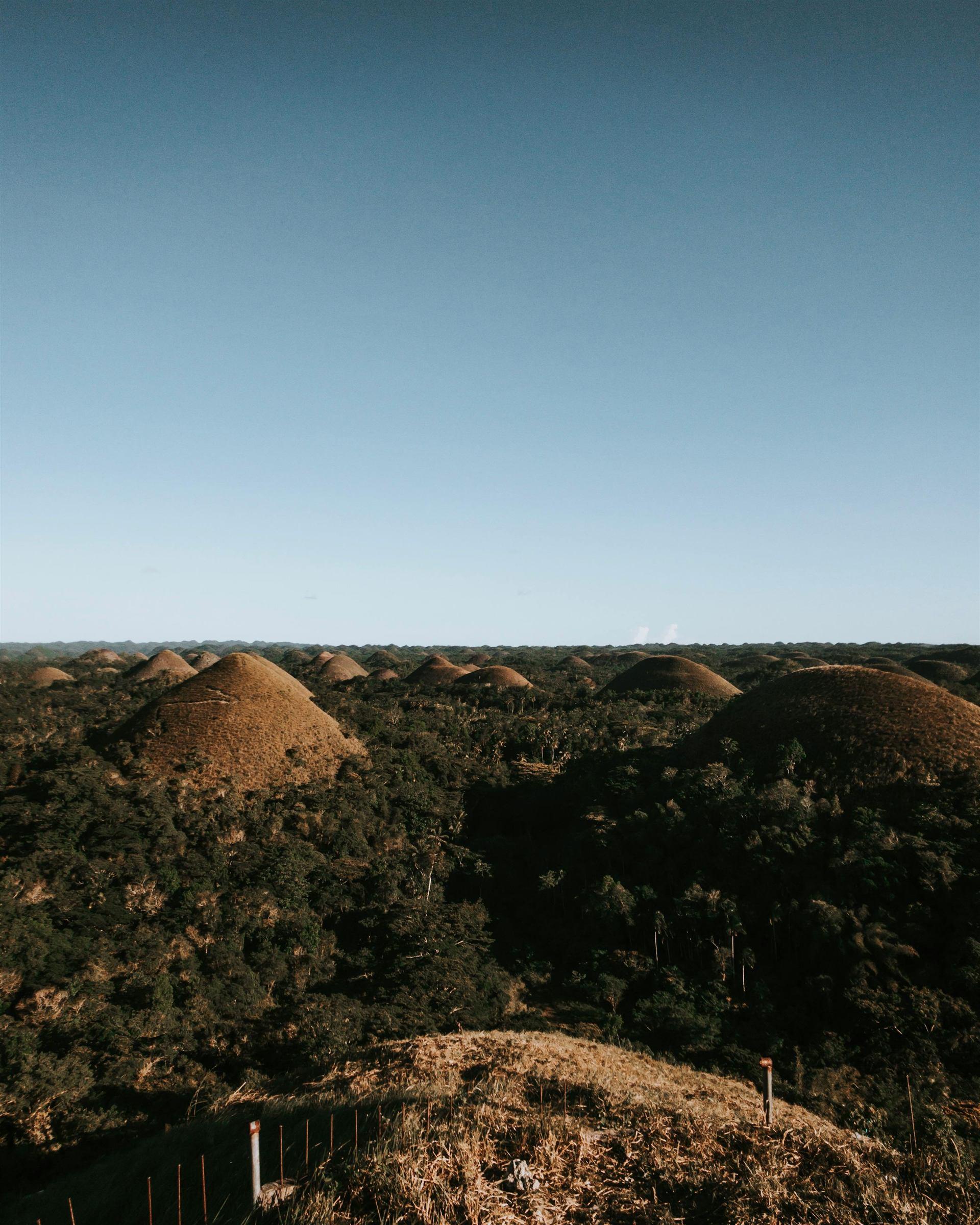
What I'd send most first-timers on. Short ferry hops between three good islands, no extra domestic flights, and a varied week — sardine run and Kawasan canyoneering on Cebu, Chocolate Hills and Balicasag on Bohol, a scooter loop on Siquijor. When a ferry runs late or weather closes a tour, the trip doesn't unravel.
Typical spend
PHP 19,000 to 31,000 / 10 days
- Ferries replace 2 to 3 domestic flights you'd otherwise need
- Moalboal, Panglao and San Juan all have sub-PHP 1,500 stays
- Water, countryside and scooter days in one trip
- Forgiving when something gets cancelled or rained off
Route B: Manila + Baguio + Sagada
The fallback when island airfares spike or the forecast looks rough. Land in Manila, do the food and museum days, take an overnight bus to Baguio, push north to Sagada. No domestic flights at all. Less iconic than the island routes, but the most predictable spend of the three.
Typical spend
PHP 17,000 to 29,000 / 10 days
- No domestic flight required end to end
- Overnight Victory Liner buses to Baguio are around PHP 750
- Binondo food crawls, Intramuros and the National Museum keep Manila days cheap
- Sagada caves and hanging coffins on a shoestring
Route C: Palawan Lite (One Base)
Palawan on a budget only works when you stop trying to do all of it. Pick one base — El Nido for lagoons, Coron for lakes and wrecks — and stay 6 to 8 nights. Joiner tours, rooms two or three streets back, and accepting you won't see the second half this trip. The scenery is worth that compromise.
Typical spend
PHP 23,000 to 38,000 / 10 days
- Pick El Nido OR Coron, never both on a tight budget
- Shared joiner tours (Tour A, Coron Loop) are the main spend
- Stay 2 to 3 streets back from the beachfront for 40% savings
- Needs a bigger weather buffer than Routes A and B
Backpacker Mode: Under PHP 1,500 a Day
This isn't a fourth route. It's the stripped-back version of the Visayas loop: dorm beds, two meals a day, mostly free activities, and one or two paid tours total. It works if you're patient with ferries and don't mind hostels. It's not really viable in Palawan or Boracay, and ten straight nights of dorms wears thin. Solo travellers can pull it off; couples usually save more by sharing a basic private room.
What the totals include — and what they don't
The numbers above cover accommodation, food, in-route transport, and a sensible number of paid activities. They exclude international flights, domestic flights between routes, travel insurance, visa fees (most nationalities are visa-free for 30 days), and souvenirs.
Add the live international or domestic flight fare you can actually book, including baggage and airport transfers. Travel insurance is also separate; its price depends on residence, age, cover limits and planned activities.
Philippines Travel Budget: Daily Costs in 2026
The figures below are per person and exclude international flights. The low end assumes hostel beds or a basic room, carinderia meals, shared transport, and selective tours. The high end buys private rooms, more paid activities, and a little more room for bad weather or a missed ferry.
| Route | Daily budget | 10-day ground cost | Best for | Main cost driver |
|---|---|---|---|---|
| Cebu + Bohol + Siquijor | PHP 1,900-3,100 | PHP 19,000-31,000 | First trips and easy island-hopping | Ferries and 2-3 activity days |
| Manila + Baguio + Sagada | PHP 1,700-2,900 | PHP 17,000-29,000 | Food, culture, and no domestic flights | Long-distance buses and cave guides |
| Palawan, one base | PHP 2,300-3,800 | PHP 23,000-38,000 | Lagoons and diving | Joiner tours and airport transfers |
| Backpacker mode (Visayas) | PHP 1,200-1,800 | PHP 12,000-18,000 | Dorms, free beach days, and slow travel | Room availability and paid-tour restraint |
These are planning ranges, not fixed quotes. Expect the upper end, or more, during Holy Week, Christmas/New Year, Chinese New Year, and short-notice domestic flight bookings. Numbers in PHP unless noted.
Accommodation per night
- Dorm bed (hostel): 500 to 900
- Fan room with shared bath: 700 to 1,200
- Private aircon room, guesthouse: 1,200 to 2,200
- Mid-range hotel or nicer guesthouse: 2,500 to 4,500
- Beachfront, peak season: 4,000 to 8,000+
Food per meal
- Carinderia plate (rice + ulam): 80 to 150
- Silog breakfast: 100 to 180
- Casual local restaurant: 200 to 400
- Tourist-strip restaurant: 400 to 800
- Beachfront seafood dinner: 600 to 1,500
- 7-Eleven sandwich + drink: 90 to 150
Transport
- Tricycle short hop: 50 to 150
- Grab in Manila or Cebu City: 150 to 400
- Ceres bus (3 to 4 hours): 250 to 450
- Overnight bus (Manila–Baguio): 600 to 900
- OceanJet ferry (Cebu–Bohol, Bohol–Siquijor): 600 to 1,200
- El Nido–Coron fast ferry: 1,800 to 2,500
- Scooter rental per day: 400 to 700
Tours and activities
- Joiner island-hopping (most destinations): 1,400 to 2,200
- Kawasan canyoneering: 1,500 to 2,500
- Bohol countryside private van (per group): 3,500 to 5,500
- Oslob whale shark experience: 1,200 to 1,800
- Coron 2-tank wreck dive day: 5,000 to 7,500
- El Nido Tour A: 1,400 to 2,000
Daily cost ranges by route
- Route A (Visayas): PHP 1,900 to 3,100/day
- Route B (Luzon): PHP 1,700 to 2,900/day
- Route C (Palawan Lite): PHP 2,300 to 3,800/day
- Route D (Backpacker): PHP 1,200 to 1,800/day
Budget by Traveller Type
| Traveller | Realistic daily spend | 10-day ground cost | What that usually looks like |
|---|---|---|---|
| Solo backpacker | PHP 1,700-3,300 | PHP 17,000-33,000 | Dorm bed or basic private, local meals, shared tours |
| Couple sharing rooms | PHP 1,500-2,800 each | PHP 15,000-28,000 each | Basic private room, local meals, shared transport |
| Comfort-first traveller | PHP 3,500-5,500 | PHP 35,000-55,000 | Private hotels, most tours, regular sit-down meals |
Best Budget Moves for a First Trip
Most of these aren't surprising — but they're the ones that actually move the total, in rough order of how much they save. Skip the ones you already do; think about the rest before you book.
Pick One Region, Not Three
The single biggest budget mistake is trying to do Cebu, Palawan and Manila in two weeks. Each transfer day is a flight or ferry plus a half-day of getting to and from terminals — and they're expensive days where you spend money but see nothing. Pick one region. Add a second only if you have 14+ days. Three regions in under two weeks is how a PHP 25,000 trip becomes a PHP 45,000 trip.
Note: Route A (Visayas) is the easiest tight loop; Route B (Luzon) is the easiest flightless trip.
Use Ferries Instead of Domestic Flights
The Visayas — Cebu, Bohol, Siquijor, Negros — is well-connected by ferry. OceanJet, 2GO and Montenegro run reliable daily routes for PHP 600 to 1,500 a hop. Two ferries replace one domestic flight at a fraction of the cost and they leave from city piers, not airports an hour out of town. The route logic of Route A is built around this.
Note: Skip the ferry strategy for Palawan to/from anywhere outside Coron–El Nido — it's not a useful network there.
Eat at Carinderias, Not Beachfront
A plate at a carinderia (local turo-turo eatery) is often far cheaper than the same meal on a tourist strip. Aim for at least half your meals there and save beachfront dinners for the one or two evenings you actually want a view. It is one of the easiest ways to keep the food budget under control without eating badly.
Note: Look one or two blocks back from the main tourist strip — that's where the locals eat.
Compare Three Tour Booths Before Booking
Hotel desks and online platforms can charge more than a walk-in operator for the same shared tour, but not always. Walk to the pier or main street, compare a few operators, and check what each quoted price includes before you book. Klook and GetYourGuide can be useful benchmarks for big-ticket activities such as Kawasan canyoneering and the Underground River.
Stay One Block Back
Beachfront rooms often cost materially more than similar rooms a street or two inland. The walk to the sand is usually only a few minutes. Staying one or two streets back is one of the most reliable ways to reduce the accommodation total without giving up convenience. It works in Alona, Panagsama, El Nido town, Corong-Corong and White Beach.
Buy a SIM in the City, Not the Island
Buy and register a Smart or Globe SIM before your first island transfer, ideally in Manila or Cebu City where you have more choice. Regular prepaid SIMs, tourist packs and eSIMs have very different prices and data allowances, so compare the current provider offers rather than relying on a fixed package price. Sort it on day one while you still have reliable shop access and wifi.
Build in One Flex Day Per Week
On a 10-day trip, leave one day completely unplanned. Ferries get cancelled, weather closes the dive sites, the cheap room you wanted is booked. The flex day absorbs that without forcing a panic flight or an expensive last-minute transfer. Travelers who pack every day end up paying twice when something shifts.
Note: Day 9 in the sample itinerary below is the buffer — leave it open.
Withdraw Cash in Bulk, Not Daily
Foreign-card ATM fees and per-withdrawal limits vary by bank and can change. Many machines show a local fee on screen, and your home bank may add another charge. Fewer, larger withdrawals are often cheaper than repeated small ones, but only take an amount you can keep secure. Check the screen before confirming instead of hunting for a permanently free ATM.
Note: Tell your bank you're traveling so they don't freeze the card on the first withdrawal.
Which Airport Makes Each Budget Route Cheaper?
The cheapest fare isn't always the cheapest arrival airport. A lower headline flight can disappear once you add a domestic hop, baggage fees, an airport hotel, and a transfer day.
- Cebu + Bohol + Siquijor: Fly into Mactan-Cebu (CEB) if you can. It puts you straight into the ferry network for Bohol and Siquijor. The Cebu to Bohol ferry guide covers the Pier 1 transfer and ticket timing.
- Manila + Baguio + Sagada: NAIA (MNL) works best because the first few days are in Manila and the Baguio bus leaves from the city. Clark can be cheaper on some routes, but only take it if the saving survives the extra transfer into Manila.
- Palawan, one base: Fly to El Nido/Lio (ENI) for El Nido, Busuanga (USU) for Coron, or Puerto Princesa (PPS) only if the cheaper fare still makes sense after the long van north. Use the El Nido transport guide or Coron transport guide before booking.
For all three, compare fares with checked baggage included. A PHP 1,500 sale fare can lose its advantage once carry-on limits, seat selection, and a last-minute bag are added.
Where to Stay Cheap (Without Being Stuck Far From Everything)
The cheapest room on Booking is usually cheap for a reason. Better approach: pick a small guesthouse or hostel one or two streets back from the main strip with working aircon and decent wifi. You'll be a 3-minute walk from the beach and pay 30-50% less than the building on it.
- Cebu City — Mad Monkey Cebu, Lub d Cebu, or small guesthouses in the Capitol/IT Park area. PHP 1,200-2,000 private. Skip the airport hotels.
- Moalboal — Stay in Panagsama but one block back from the beach path. PHP 1,200-1,800 gets you a clean aircon room a 3-minute walk from the dive shops.
- Panglao (Bohol) — Alona one street back, or Dumaluan if you want quieter. PHP 1,500-2,500. Skip Tagbilaran unless it's a transit overnight — it's a port city, not a beach town.
- Siquijor (San Juan) — Plenty of small guesthouses under PHP 1,500 a short walk from the beach. The island is small enough that base location matters less than elsewhere.
- Manila — Makati or BGC if you want safety and food, Malate if you want budget closer to Intramuros. Z Hostel and MNL Boutique Hostel are reliable. PHP 1,000-2,000.
- Baguio — Anywhere walking distance to Session Road or Burnham Park. Cool weather means no aircon needed, so the room rate drops naturally.
- El Nido — Two or three streets back from the town beach is where the value is. PHP 1,500-2,800. Corong-Corong is cheaper still but you'll tricycle in for tours.
- Coron — Town center on the side streets. PHP 1,200-2,500 gets you a short walk from the pier and the market.
Where to Eat Cheap
Food is where the budget actually loosens up — the cheap option is usually the better option. The reason most travellers miss it is that carinderias don't have menus or English signs, so it's not obvious what they are or how to order. Here's the playbook:
- Breakfast: Silog (rice + egg + meat) at any small eatery — PHP 100-180. Or pandesal and coffee from a bakery for PHP 50.
- Lunch: Carinderia turo-turo — point at two ulam (mains) over rice. PHP 100-180.
- Dinner: Same carinderia for the budget nights, one beachfront or sit-down dinner every 2-3 days for the rest.
- Snacks: Bananacue, kwek-kwek, fishballs, isaw from street stalls. PHP 30-60.
- 7-Eleven and Uncle John's: Surprisingly useful for siopao, rice meals and coffee when you need a quick breakfast or ferry-day snack.
What to look for: an open kitchen with rice in steamers and a row of vegetables and meat dishes behind glass. That's a carinderia. Walk in, look at what's in the trays, point at two things, get rice on the side. Eat at one of the plastic tables. Pay PHP 120. That's it.
Things worth ordering: lechon in Cebu (skip the upscale chains — go to CNT or a roadside lechon stand), sisig anywhere, halo-halo at any Razon's or Iceberg's, chicken inasal in the Visayas, kare-kare for one nicer dinner. The food most travellers remember is the carinderia food, not the resort buffet.
10-Day Budget Itinerary (Route A)
This is the full day-by-day sample because Route A is the strongest first-time pick. The two shorter route outlines below cover the alternatives; use the Cebu, Bohol, Siquijor, Manila, Baguio, Palawan, El Nido and Coron guides to choose stays and activities.
Day 1: Arrive in Cebu City
- Land at Mactan-Cebu (CEB). Grab to your guesthouse in the Capitol or Lahug area, PHP 250-400.
- Buy and register a Globe or Smart SIM, then choose a current data pack that suits your route and expected use.
- Walk Colon Street, eat lechon at CNT or a roadside stand. Early night.
- Day cost: PHP 1,800-2,500.
Day 2: Cebu City + Bus South
- Morning: Magellan's Cross, Basilica del Santo Niño, Fort San Pedro — all walkable.
- Lunch at Larsian BBQ (Fuente Osmeña) or a carinderia near the cathedral.
- Afternoon bus from the South Bus Terminal to Moalboal. Ceres aircon bus PHP 280-380, 3.5-4 hours. Walk in or short tricycle to Panagsama.
- Day cost: PHP 1,800-2,400.
Day 3: Moalboal Sardine Run
- Snorkel the sardine run directly from Panagsama Beach — no boat needed. Free, the best snorkel of the trip for many people.
- Lunch on the strip or one block back. Slow afternoon at Basdaku (White Beach) if you want soft sand.
- Day cost: PHP 1,400-2,000.
Day 4: Kawasan Falls Canyoneering
- Full half-day canyoneering from Badian into Kawasan. Joiner tour PHP 1,500-2,200 with gear, transport and lunch.
- Back to Moalboal by mid-afternoon. Easy dinner.
- Day cost: PHP 2,200-2,800.
Day 5: Ferry to Bohol
- Early Ceres bus back to Cebu City (PHP 280). OceanJet from Pier 1 to Tagbilaran (PHP 800-1,000, ~2 hours).
- Tricycle or van to Panglao (PHP 400-600). Settle in around Alona or Dumaluan.
- Book tomorrow's Balicasag boat tonight — the 6:30am one is the only one worth taking; later boats fight crowds at the snorkel sites.
- Day cost: PHP 2,500-3,200.
Day 6: Balicasag Morning, Slow Afternoon
- First Balicasag boat at 6:30am — joiner around PHP 1,500-2,000 with snorkel gear and entrance fees.
- Lunch at Bohol Bee Farm if the timing works (book or arrive early).
- Slow afternoon at Alona or back to the room.
- Day cost: PHP 1,800-2,500.
Day 7: Bohol Countryside Loop
- Share a private van with other travelers or join a group tour. PHP 800-1,400 per person joiner, PHP 3,500-5,500 for a private van split four ways.
- Chocolate Hills, tarsier sanctuary (Corella only), Loboc (kayak, not buffet cruise), Baclayon Church.
- Day cost: PHP 1,800-2,800.
Day 8: Ferry to Siquijor
- OceanJet from Tagbilaran to Larena, Siquijor (PHP 800-1,000, ~2 hours).
- Tricycle to San Juan (PHP 250-400). Rent a scooter for the next 24-48 hours — PHP 400-500/day, split with a friend.
- Sunset at Paliton Beach.
- Day cost: PHP 1,800-2,400.
Day 9: Siquijor Island Loop (Flex Day If Needed)
- Cambugahay Falls (rope swings, PHP 50 entry), Lazi Church, Salagdoong, Old Enchanted Balete Tree. All doable in one scooter day.
- If something earlier got weathered or shifted, this is the buffer day. Use it.
- Day cost: PHP 1,200-1,800.
Day 10: Return to Cebu and Fly Out
- OceanJet Siquijor to Cebu (PHP 1,000-1,400, ~4 hours direct, or via Tagbilaran).
- Grab to airport from Cebu pier. Leave a 2-hour buffer.
- Day cost: PHP 1,800-2,500.
10-day total from the day-by-day plan: PHP 18,100-23,900 per person, before a small weather, ferry or booking buffer. Couples sharing rooms typically land near the lower end; solo travellers in private rooms near the higher end.
Two More 10-Day Budget Route Outlines
Route B: Manila + Baguio + Sagada
- Days 1-3: Manila. Base in Makati, Malate, or Binondo. Use the first day for arrival and a SIM, then keep the next two days to museums, Intramuros, and cheap food crawls rather than paid tours.
- Days 4-6: Baguio. Take an overnight or early bus north. Give yourself one slow day around Session Road and Burnham Park, then one day for food, cafes, or a short countryside trip.
- Days 7-8: Sagada. Shared van from Baguio, then choose one cave or hiking day. Do not try to cram in every guide-led activity; the road time is the real cost here.
- Days 9-10: Return via Baguio and Manila. Keep Day 9 loose in case the mountain-road transfer runs late. A late bus back to Manila makes Day 10 simpler for an international flight.
Budget: PHP 17,000-29,000 per person on the ground. Best when you want a cheaper trip with food and culture days, or island weather is looking rough.
Route C: Palawan, One Base Only
- Days 1-2: Arrive and settle in. Fly into the airport that serves the base you actually chose: El Nido for lagoons or Coron for lakes and wrecks. Leave the arrival day free rather than booking a tour straight away.
- Days 3-5: Two marquee boat days. In El Nido, Tour A plus one other joiner route is enough for most people. In Coron, do the Coron Loop and one wreck-dive or beach day instead of chasing every tour board.
- Days 6-8: Slow days and one flex day. Use these for beaches, diving, a scooter day, or weather make-up. This is where the route stays enjoyable instead of turning into a string of paid boat trips.
- Days 9-10: Final tour or buffer, then fly out. Keep the final full day clear if your onward flight matters. Small airports and boat trips are the first things to shift when weather turns.
Budget: PHP 23,000-38,000 per person on the ground. It costs more than the Visayas, but it works when you stay in one base and choose tours deliberately.
Common Budget Traps to Avoid
These are the ones that catch first-timers in roughly the order they appear on a trip:
- Airport taxi mark-ups. Manila and Cebu City both have official Grab pickup zones — use them. The drivers loitering at arrivals charging PHP 1,500 for a PHP 350 ride are betting on jet lag winning.
- "All-inclusive" island-hopping that isn't. Ask exactly what's included. Environmental fees (PHP 200-400), lake fees (PHP 200-300 each), snorkel gear (PHP 150-300), lunch upgrades — they add up to PHP 800-1,500 on top of the headline tour price.
- Renting a scooter on day one without ever riding one. A motorbike crash is the most common way budget trips end early. If you've never ridden, don't learn on a Filipino road. The hospital bill is bigger than anything you save.
- Booking tomorrow's tour through your hotel. The hotel may be convenient, but it is worth comparing the inclusions and price against a few pier or main-street operators before you commit.
- Beachfront breakfasts. PHP 350 for two eggs and toast that's PHP 90 at the carinderia 100 metres away. Breakfast is the meal where the mark-up is biggest and the food is most generic. Eat one block back.
- "Just one more island." The fourth destination on a 10-day trip is rarely worth what it costs. Two transfer days plus a fresh round of accommodation plus the cost of getting there — you'd usually be better off staying an extra two nights somewhere you already like.
- Pearl, gem and "factory tour" pitches. Common in Manila and Cebu. A friendly stranger strikes up a conversation and steers you toward a shop where the prices are oddly high and the merchandise oddly questionable. Walk on. If you actually want pearls, Greenhills in San Juan is where Filipinos go.
- Oslob whale sharks. The big cheap activity from south Cebu, and an ethical mess — the sharks are hand-fed daily to keep them in the bay. If swimming with whale sharks is what you came for, do Donsol in Sorsogon instead. It's seasonal (Nov-May) and not guaranteed, but the sharks are wild and the operation is community-run. Worth the extra effort.
When It's Worth Splurging
Strict budget travel that skips everything stops feeling like a trip after a few days. A handful of things are worth the extra spend:
- One canyoneering, dive or whale shark day. Put the money on the activity, not a slightly nicer room you'll only sleep in. PHP 2,000 on Kawasan canyoneering is what you'll remember a year later; PHP 2,000 extra on the hotel is not.
- One private boat day for groups of 4+. A private boat in El Nido or Coron is PHP 8,000-12,000 split four ways — same per-person cost as a joiner tour, but you choose the route and pace.
- A direct ferry instead of a connecting one. Sometimes the PHP 400 extra direct ferry saves 4 hours. On a 10-day trip, that's worth it.
- A real bed every 3 to 4 nights if you're hostel-hopping. Dorms are fine for stretches. Ten straight nights of them is grim.
- One sunset dinner per destination. A mango daiquiri and grilled fish overlooking the beach is what you came for. Once per destination is plenty, every night and it stops feeling special.
Budget Travel Tips for First-Timers
- Visa: Visa-waiver length, eligibility and extension fees depend on your passport and can change. Check the Bureau of Immigration's current 9A visa-waiver guidance before you fly, rather than budgeting from a fixed extension fee.
- Pick dates for your route, not the whole country. Palawan and most Visayas routes are generally steadier from December to May; Siargao's calendar is different, and Luzon mountain roads get rougher in the main rainy season. Late May to June and late October to early December can be good-value shoulder windows, but check the regional breakdown before locking anything in.
- Avoid Holy Week and Christmas/New Year. Domestic flights and rooms double or triple. Chinese New Year (late Jan/early Feb) is similar in Boracay and Cebu.
- Travel insurance is non-negotiable. Dengue hospitalisations and motorbike scrapes happen. SafetyWing or World Nomads — confirm bike and dive cover.
- Don't drink the tap water. Bottled or 5L refill jugs only. Restaurants serve filtered water by default; ice in established places is fine.
- Plugs and power: Type A, B and C plugs are common, with 220V/60Hz power. US devices often plug in directly, but check the voltage rating. UK and EU travellers should bring an adapter.
- GCash: Some businesses prefer it, but do not treat it as a cash substitute. Account eligibility, verification and available features depend on the current GCash rules and your documents, so carry cash and a card as backups.
- Pack light. Carry-on can reduce domestic-flight costs, but airline baggage rules and prices vary. Most beach destinations need little more than swimwear, a few light outfits and sun protection.
- Reef-safe sunscreen: Some protected areas and tour operators restrict particular sunscreen products. Bring a reef-safe option from home if you can rather than assuming it will be easy to find at your destination.
- Bring a dry bag, refillable water bottle and headlamp. A small dry bag is useful from day one on ferries and boat trips. Refill jugs are generally cheaper and create less plastic waste than buying individual bottles.
- Tipping isn't expected but appreciated — round up at carinderias, PHP 50-100 for tour guides if they did a good job, 10% at sit-down places if no service charge is on the bill.
- Bargain politely at markets and trike stands — not at carinderias, restaurants or fixed-price tour booths. A smile and PHP 50 off is normal; grinding over PHP 20 isn't.
- Buy water in larger refill jugs at small shops instead of relying on individual bottles. Refill your bottle where the accommodation provides safe drinking water.
- Learn five Filipino words. Salamat (thank you), kuya/ate (older brother/sister, polite address for any adult roughly your age or older), po (added to the end of sentences to be polite), magkano (how much). It's a low-effort thing that changes how people respond to you.
A Last Word Before You Book
The Philippines is one of the few places where the cheaper version of the trip is often the better one. The carinderia meal is better than the resort buffet. The joiner boat with eight strangers usually has more laughs than the private one. The PHP 1,400 guesthouse two streets back is the same building as the PHP 3,200 one on the beach — someone just took the sign down and put a different one up.
The one place that logic breaks is transfers. Cheap transfers cost time, and time is the thing a 10-day trip is shortest on. Pay PHP 400 more for the direct ferry. Take the morning flight, not the 6am one with a 3-hour layover. Spend on motion not on rooms.
If you only remember three things from this guide: pick one region, eat where Filipinos eat, and leave one flex day a week. Everything else is detail.